
Bespoke vs Made to Measure: 5 Honest Differences
The bespoke vs made to measure question trips up almost everyone buying their first serious suit, and the confusion is understandable because the terms are used loosely, and often interchangeably, by shops that should know better. Add off-the-rack into the mix and you have three quite different products at three very different prices. This guide lays out the five honest differences so you know exactly what you are paying for before you order in Bangkok or anywhere else.
Table of Contents
Bespoke vs made to measure vs off the rack, in one minute
Off the rack means a finished suit made to standard sizes that you buy and, at most, have lightly altered. Made to measure starts from an existing base pattern that is adjusted to your measurements. Bespoke starts from nothing: a brand-new pattern is drafted for your body alone, cut by hand, and refined over multiple fittings. Price and time rise as you move up that ladder, and so does the quality of the fit.
What “bespoke” actually means (and what it doesn’t)
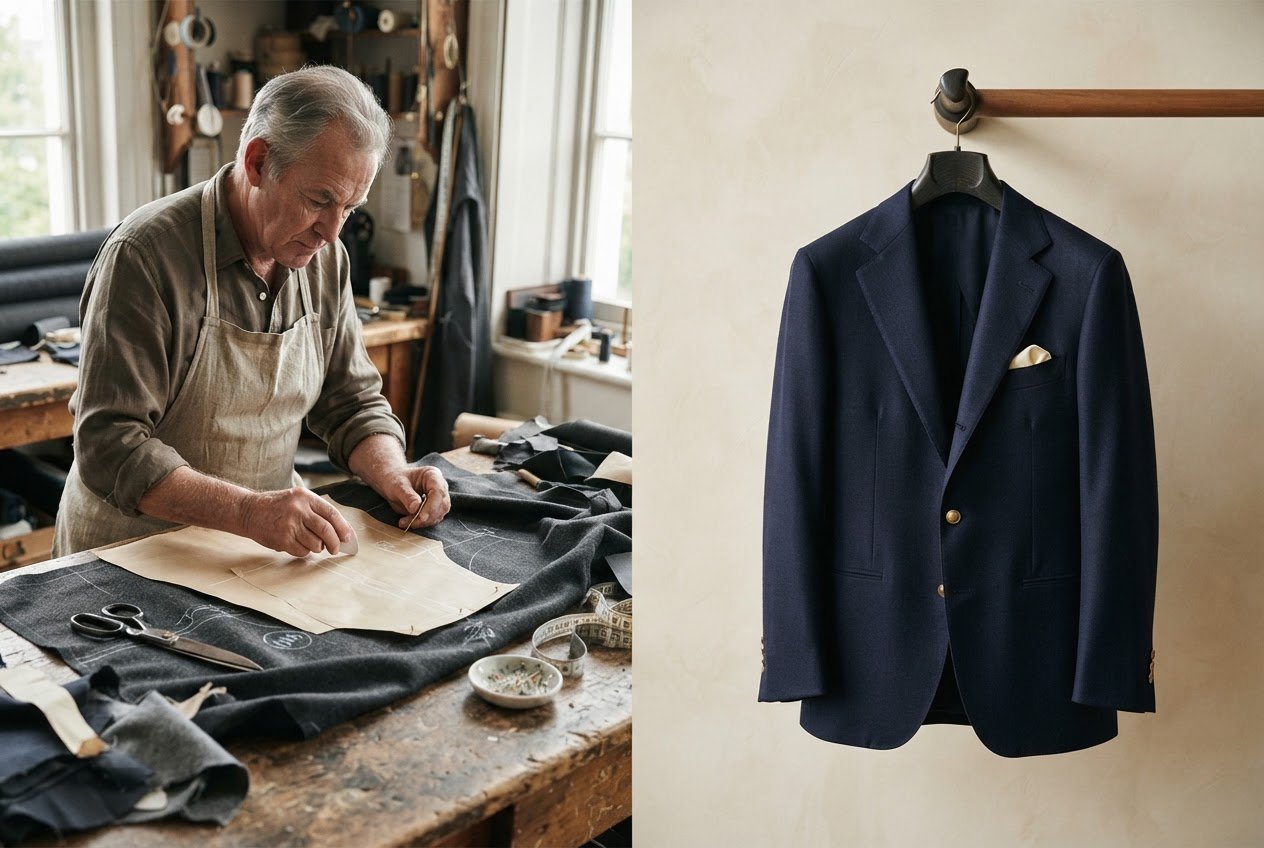
True bespoke means a unique paper pattern is created from your measurements and posture, the cloth is cut by hand, and the garment is built up and corrected across two or more fittings. Nothing is pulled from a size library. The word gets borrowed by sellers offering something closer to made to measure, so the test is simple: ask whether a new individual pattern is drafted for you and how many fittings are included. If the honest answer is “we adjust a standard block,” that is made to measure, which is perfectly good, but it is not bespoke.
5 honest differences: bespoke vs made to measure
Here is where the three approaches genuinely diverge, and why the price gap exists.
1. Pattern and fit
This is the heart of the bespoke vs made to measure distinction. Off the rack fits an average body of your nominal size. Made to measure improves on that by tweaking a base pattern, which handles most bodies well. Bespoke builds the pattern around your exact frame, including the asymmetries almost everyone has, one shoulder lower than the other, a slight stoop or an athletic seat, so the fit is as close to perfect as tailoring gets.
2. Fabric choice
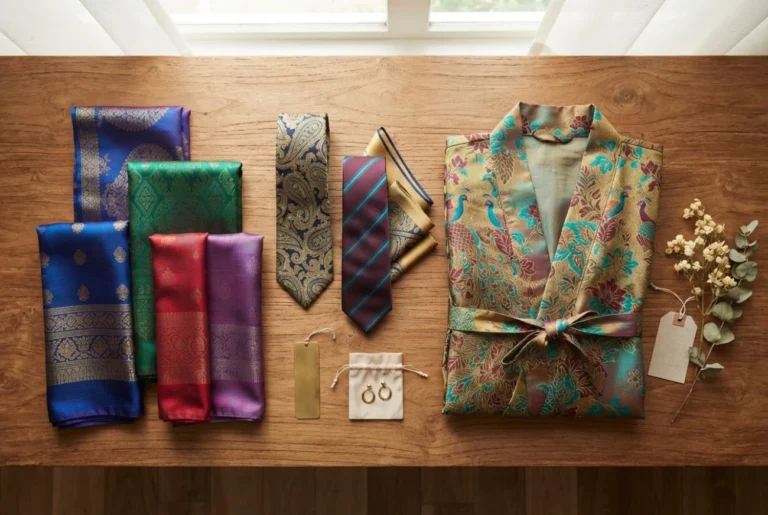
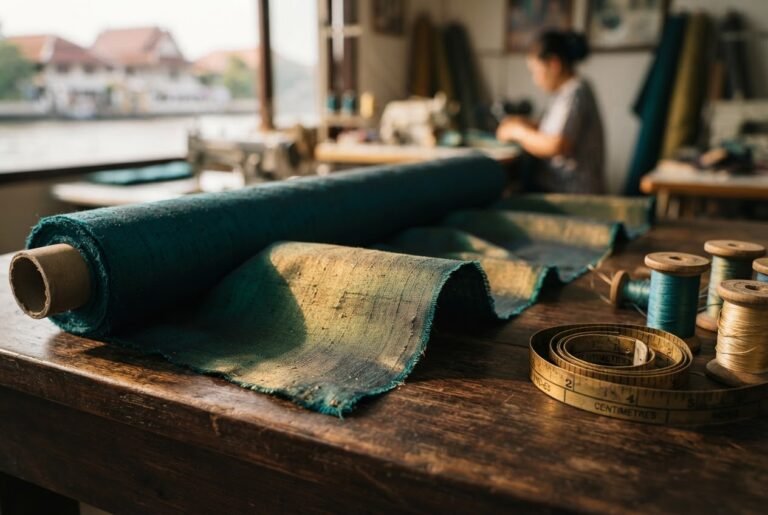
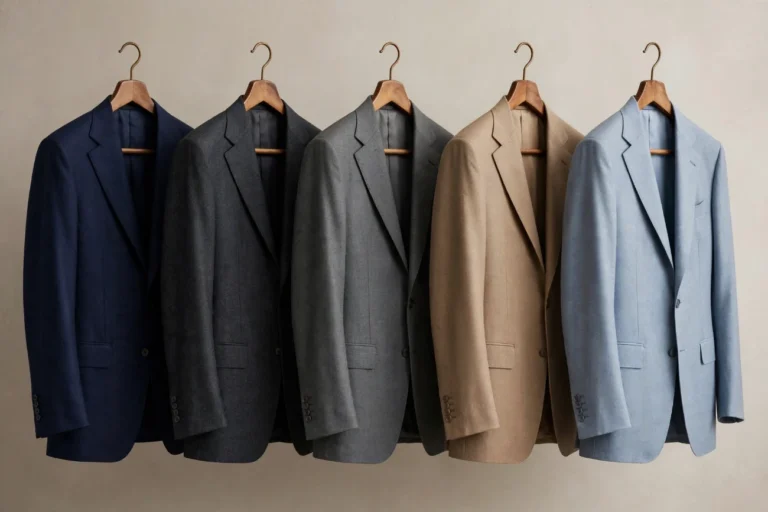
Off the rack limits you to whatever the maker chose. Made to measure opens up a decent swatch book. Bespoke gives you the full run of the tailor’s cloth, from tropical-weight wool to genuine Thai silk, along with control over linings, buttons, lapels and every finishing detail. If you want a specific weight for the climate, bespoke is the only route that guarantees it.
3. Number of fittings
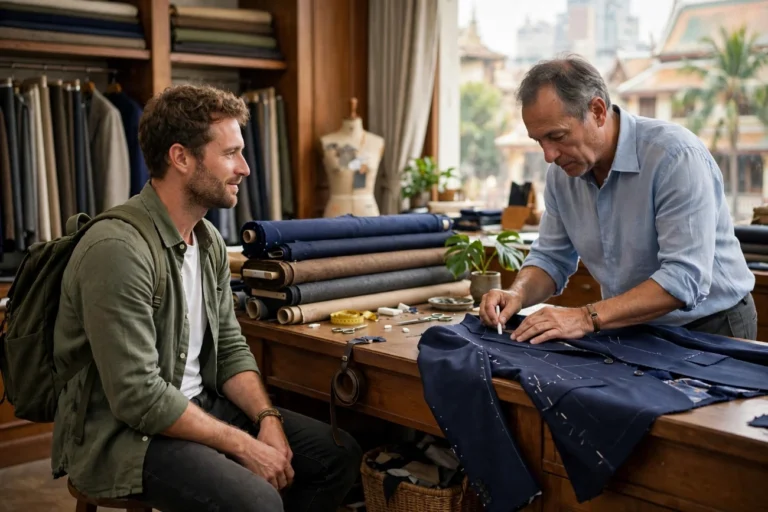
Off the rack involves no fittings beyond trying it on. Made to measure typically has one. Bespoke includes two or more, because the whole method depends on seeing the garment on your body and correcting it in stages. Those fittings are where a good result becomes a great one.
4. Price
You are paying for labour and personalisation, so the ladder is steep. Off the rack is cheapest, made to measure sits in the middle, and bespoke costs the most because it is the most hand-intensive. That said, Bangkok changes the maths: bespoke here often costs what made to measure or even good off the rack costs in Europe or the US. At Om Fashion a fully bespoke two-piece suit starts from 6,000 THB, with shirts from 1,500 and ladies’ suits from 6,500, and you can see the full breakdown on the pricing page.
5. Time to make
Off the rack is instant. Made to measure usually takes a couple of weeks as the order is produced elsewhere. Bespoke needs a few days on the ground for the fittings: at Om Fashion most bespoke suits are ready in around 2 to 3 days with one or two fittings, and genuine express work of 12 to 24 hours can sometimes be arranged case by case depending on the cloth and workshop schedule. Plan your trip so you have those days available.
When off the rack is the right call
None of this makes off the rack wrong. If you need something today, if your body is close to standard proportions, or if the suit is for occasional wear, a well-chosen off-the-rack piece with minor alterations is a sensible, economical choice. The case for stepping up is strongest when fit genuinely matters to you, when you are hard to fit off the peg, or when you want a specific cloth and set of details you cannot find ready-made.
Which one is worth it in Bangkok?
Because skilled labour is more affordable here, Bangkok is the rare place where full bespoke is within reach of a normal budget, which shifts the value calculation firmly toward having a pattern made for you. For most visitors, a bespoke or high-quality made-to-measure suit from a Bangkok tailor delivers a fit and a price that would be impossible back home.
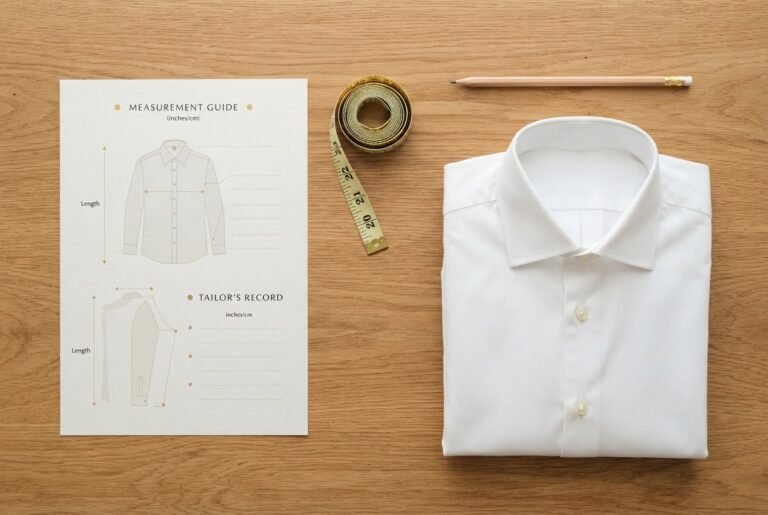
To go deeper, read exactly how bespoke suits are made, choose the right cloth with our guide to the best suit fabric for hot weather, and if you plan to reorder from home, learn how to measure yourself for a suit. When you are ready, our bespoke suits service is the place to start. For a wider look at the local market, see the independent Bangkok tailor comparison from Pierre Blake.
Frequently asked questions
Is made to measure as good as bespoke?
For many people, yes. Made to measure fits most bodies very well and costs less. Bespoke pulls ahead when you have unusual proportions, want total control over cloth and detail, or simply want the closest possible fit.
Why is bespoke so much cheaper in Bangkok?
Skilled tailoring labour costs less in Thailand than in Europe or North America, so the same hand-made process carries a lower price. The craft is comparable; the labour rate is not.
How long do I need in Bangkok for a bespoke suit?
Allow a few days so you can attend one or two fittings. Most bespoke suits at Om Fashion are ready in around 2 to 3 days, with faster express work sometimes possible on request.