
Best Suit Fabric for Hot Weather: 6 Smart Picks
Choosing the best suit fabric for hot weather is the single decision that determines whether you look sharp or spend the day soaked through. In a climate like Bangkok’s, the cut of a suit matters far less than the cloth it is made from. Get the fabric right and a tailored jacket stays comfortable at 35 degrees; get it wrong and even a beautiful suit becomes unwearable by mid-morning. This guide breaks down what actually keeps you cool, the six smartest fabric choices, and what to avoid.
Table of Contents
What makes a suit fabric breathable
Three things decide how a fabric copes with heat: weight, weave and fibre. Weight is measured in grams per metre, and lighter cloth (roughly 220 to 280 grams for the tropics) lets more air through. Weave matters just as much: an open, high-twist weave allows heat to escape, while a dense, tightly packed one traps it. Fibre is the third factor, and natural fibres like wool, linen, cotton and silk breathe and manage moisture far better than synthetics.
The best suit fabric for hot weather usually scores well on all three: light in weight, open in weave, and made from a natural fibre. Keep that framework in mind and the choices below make sense.
6 smart picks for hot and humid climates
These are the fabrics worth considering, roughly in order of how versatile they are for tropical tailoring.
1. Tropical-weight wool
Counterintuitive but true: high-twist, open-weave “tropical” wool is one of the best hot-weather fabrics there is. The tight twist of the yarn creates tiny air channels that breathe well and resist wrinkles, and wool naturally wicks moisture away from the skin. It also drapes and holds its shape better than linen or cotton, which is why it remains the default for a business suit in the tropics. At Om Fashion, a tropical-weight wool sits near the starting price for a bespoke suit, which makes it the sensible all-rounder.
2. Linen
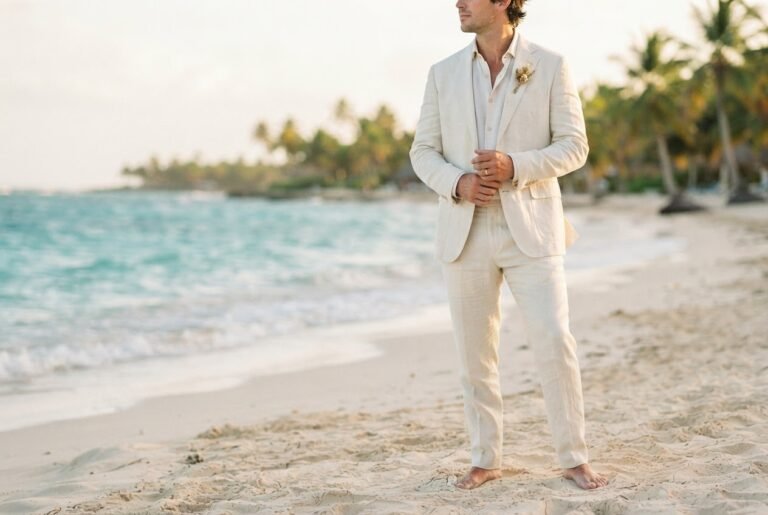
Linen is the classic hot-climate cloth for a reason. It is highly breathable, absorbs moisture and dries quickly, and feels cool against the skin. The trade-off is that it creases readily, which some people love as a relaxed, lived-in look and others dislike. For holidays, beach events and smart-casual wear in serious heat, linen is hard to beat.
3. Cotton
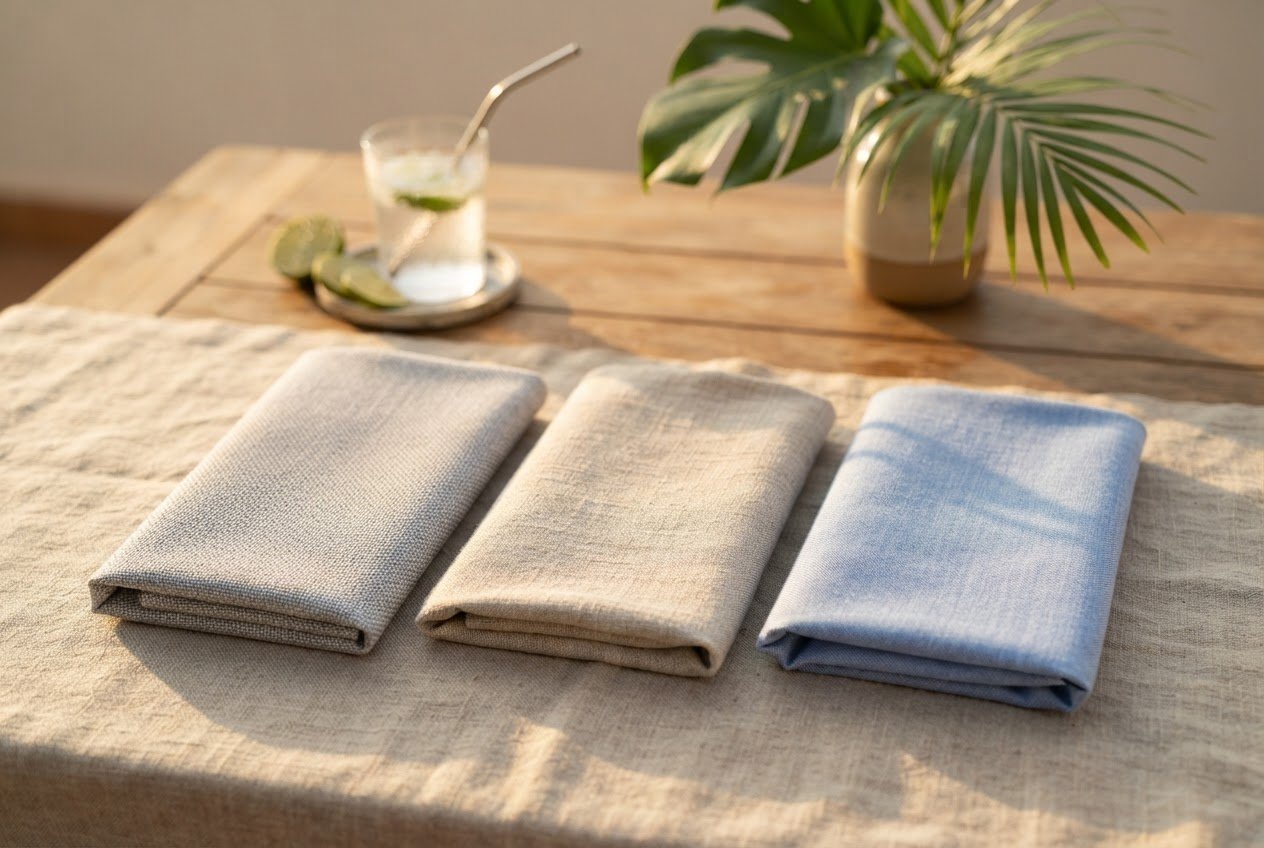
Cotton sits neatly between wool and linen. It breathes well, feels soft, and creases less dramatically than pure linen while still reading as relaxed rather than formal. A cotton suit or separates work beautifully for daytime events and travel, and cotton takes colour well if you want something in tan, stone or pale blue.
4. Thai silk
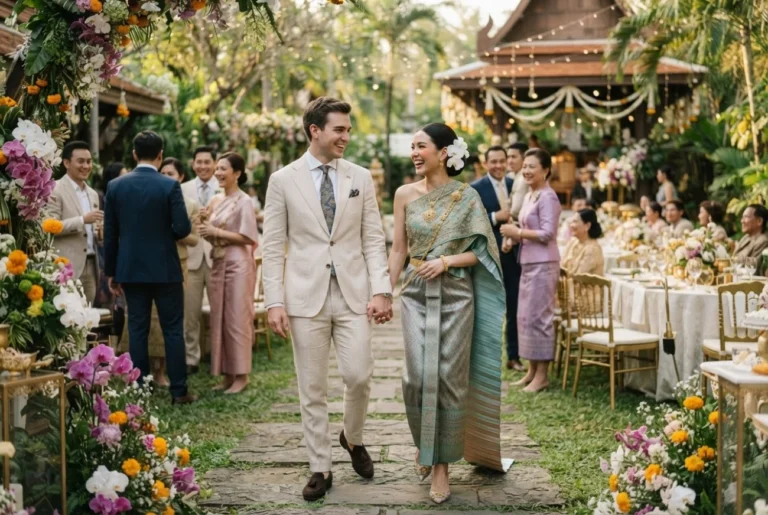
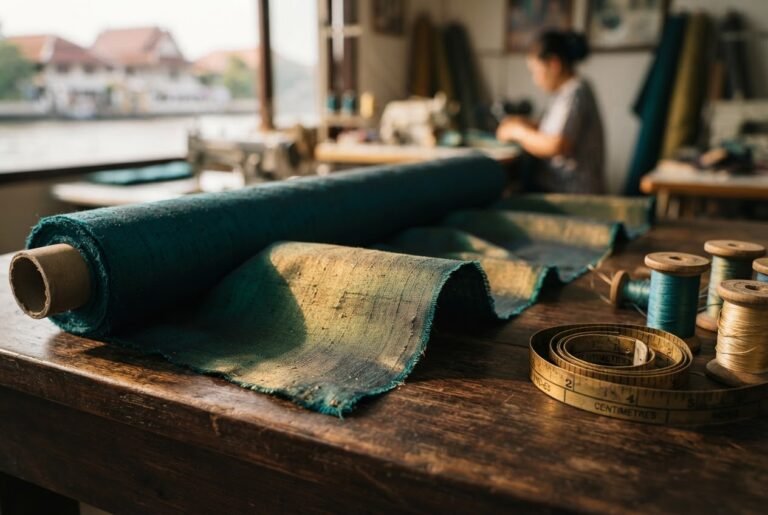
Genuine Thai silk is a natural fibre that breathes and regulates temperature surprisingly well, which is why it has been worn in this climate for centuries. It brings a distinctive lustre and a two-tone sheen that no other fabric matches, making it a striking choice for a special occasion or a tropical wedding. If you are considering it, learn how to tell real Thai silk before you buy, and see what it becomes on our Thai silk garments page.
5. Cotton-linen blend
A cotton-linen blend aims for the best of both: the coolness and texture of linen with more crease resistance from the cotton. It is a smart middle path if you want the summery character of linen without quite so much rumpling. Availability varies by cloth range, so confirm the specific blend with your tailor.
6. High-twist open-weave wool
A step up from standard tropical wool, an even more open high-twist weave (sometimes marketed under names like fresco) maximises airflow while keeping wool’s resilience and drape. It is a connoisseur’s hot-weather choice for a suit that has to look formal yet survive humidity. As with any specialist cloth, check what your tailor can source before setting your heart on it.
Fabrics to avoid in the tropics
Just as important as knowing the best suit fabric for hot weather is knowing what to skip. Polyester and heavily synthetic blends are the main offenders: they trap heat, do not absorb moisture, and leave you clammy. Heavyweight worsted wool designed for European winters is another mistake, however good it looks on the roll. Thick, tightly woven cloth of any fibre will feel oppressive once the temperature climbs.
Colour, lining and construction for hot weather
Fabric is the biggest factor, but a few construction choices amplify it. Lighter colours reflect heat, so mid-greys, tans and blues are more comfortable than black or charcoal. Ask for a half-lined or unlined jacket, which removes a hidden layer of trapped warmth. A softer, less structured shoulder also helps the jacket breathe and move. A good tailor will steer you on all of this, matching the make to the cloth.
To understand how those decisions are built into a garment, our explainer on how bespoke suits are made is worth a read, and if you are weighing your options, see bespoke vs made to measure vs off the rack.
Getting a hot-weather suit made in Bangkok
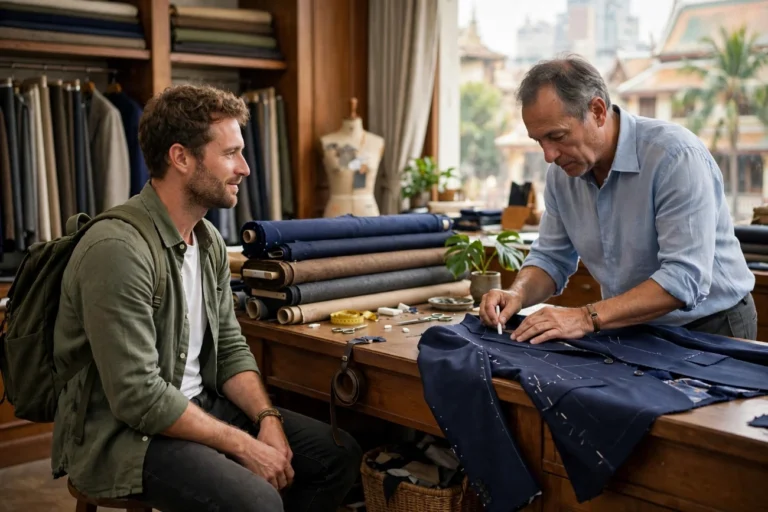
Bangkok is one of the best places in the world to commission a warm-climate suit, precisely because local tailors work with tropical cloth every day. At Om Fashion, our confirmed hot-weather range covers tropical-weight wool, linen, cotton and genuine Thai silk, and a fully measured two-piece suit starts from 6,000 THB, rising with the cloth you choose.
You can browse the range on our suit fabrics page, see the finished results under bespoke suits in Bangkok, and for an independent view of the city’s tailoring scene, the Best Tailors in Bangkok guide is a useful reference. Message the workshop with your travel dates and we will recommend the right cloth for the season you are visiting.
Frequently asked questions
Is wool really good for hot weather?
Yes, as long as it is tropical or high-twist wool in a light weight. It breathes, wicks moisture and resists wrinkles better than most alternatives, which is why it remains the standard for a business suit in hot climates.
Linen or cotton for the heat?
Linen is cooler and more breathable but creases heavily; cotton is a touch warmer but holds its shape better. Choose linen for the most relaxed, coolest option and cotton for something a little more polished.
What is the coolest colour for a hot-weather suit?
Lighter shades reflect heat, so tan, stone, light grey and pale blue feel cooler than black or charcoal, both physically and visually.