
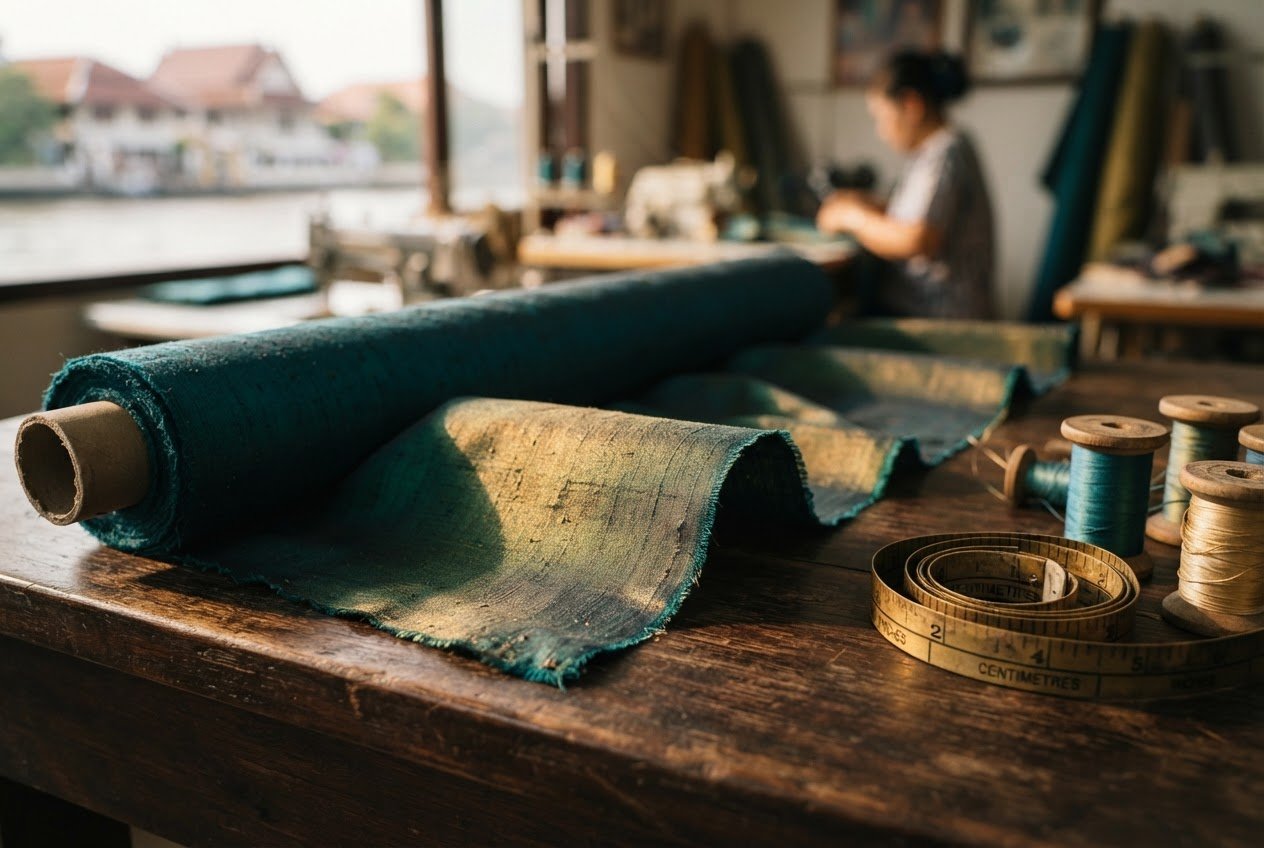
How to Tell Real Thai Silk: 7 Proven Tests
Learning how to tell real Thai silk from a convincing imitation is the most useful skill you can carry into a Bangkok fabric shop. Genuine Thai silk is one of the great souvenirs of a trip to Thailand, but the markets are also full of polyester and blended cloth sold at silk prices. The good news is that you do not need a laboratory to spot the difference. A handful of quick, physical checks will tell you almost everything, and this guide walks through the seven that a working tailor actually relies on.
Table of Contents
How to tell real Thai silk in 30 seconds
If you are standing at a stall right now and only have a moment, do three things. Rub a corner of the fabric quickly between your fingers and feel whether it warms up (silk does; polyester stays cool). Tilt it toward the light and look for a two-tone shimmer where the colour seems to shift. Then check the price. Real hand-woven Thai silk is never cheap, so a “silk” scarf for a few hundred baht is almost certainly not what it claims to be.
Those three signals catch most fakes. The rest of this guide explains why they work and adds four more tests for when you are spending real money on a suit length or a dress.
Why fake Thai silk is everywhere in Bangkok
Thai silk carries a premium reputation worldwide, which makes it an obvious target for imitation. Polyester and rayon can be woven to mimic the look of silk closely enough to fool a casual buyer, and they cost a fraction of the price to produce. In tourist areas especially, “Thai silk” is often used as a loose marketing term rather than a description of the actual fibre.
None of this means you should avoid buying. It means you should buy from a seller who can tell you exactly what the cloth is, and it means knowing the tests below so you can verify their answer yourself. Reputable specialists are happy to be checked. If a seller gets defensive when you ask basic questions about the fibre, that is your answer.
7 proven tests to tell real Thai silk
Here is the full checklist. You will not need all seven for every purchase, but the more that agree, the more confident you can be.
1. The burn test
This is the most decisive test if the seller will let you pull a single thread. Real silk is a protein fibre, so it burns slowly, smells like singed hair, self-extinguishes when you pull the flame away, and leaves a brittle black ash that crushes to powder between your fingers. Polyester behaves completely differently: it melts rather than burns, smells like chemicals or plastic, and hardens into a small bead you cannot crush. Only do this with the seller’s permission and a loose thread, never a finished garment.
2. The sheen and colour shift
Genuine Thai silk is traditionally woven with one colour in the warp and another in the weft. That construction produces a distinctive two-tone iridescence: turn the cloth toward the light and the colour appears to shift, say from green to gold or from red to purple. Cheap imitations tend to have a flat, one-dimensional shine that looks the same from every angle. That living, shifting lustre is one of the hardest things for a synthetic to fake.
3. The weave irregularities
Authentic Thai silk is hand-woven, so if you look closely you will find tiny slubs and small irregularities in the threads. These little imperfections are a sign of a real loom and a real weaver, not a flaw. Machine-made polyester is usually perfectly uniform, with an even, flawless surface that can actually be a giveaway. Perfect is suspicious.
4. The touch and warmth
Silk is a natural insulator, so it warms up quickly against your skin and feels soft and slightly dry to the touch. Rub a section briskly for a few seconds and notice the temperature. Polyester and many blends stay cool and can feel slightly slippery or clammy no matter how long you hold them. This is the fastest test to do discreetly while you browse.
5. The ring test
Fine silk is supple enough to be pulled through a ring and spring back without creasing badly. Many synthetics are stiffer and bunch up or resist. Treat this one as a supporting clue rather than proof, though, because heavier-weight Thai silks woven for suiting are thicker by design and will not always slide through a ring even when they are entirely genuine.
6. The price reality
Real Thai silk is labour-intensive to produce, from raising the silkworms to hand-weaving the cloth, and the price reflects that. If a piece is being sold for far less than seems plausible for handmade silk, assume it is blended or synthetic until proven otherwise. Bargains exist, but genuine silk at throwaway prices does not.
7. The Peacock certification mark
Thailand runs an official certification scheme that stamps qualifying silk with a Royal Peacock logo, in different colours for different grades of authenticity and production method. Seeing that mark is a strong sign you are dealing with certified Thai silk. Not every genuine piece from a small weaver carries it, so its absence is not proof of a fake, but its presence is a reassuring green flag. You can read more about the tradition and grading of Thai silk on Wikipedia.
Real Thai silk vs Chinese silk vs polyester
It helps to know what you are comparing against. Chinese silk is often genuine silk, but it is typically finer, smoother and more uniform than Thai silk because it is usually machine-woven from a different silkworm variety. It is not a fake, simply a different product with a sleeker, less textured character.
Thai silk, by contrast, is heavier, more textured and more lustrous, with that hand-woven irregularity and warm colour depth that collectors prize. Polyester “silk” is the one to watch: it mimics the shine but fails the burn test, the warmth test and, usually, the price test. Once you have handled all three a couple of times, the differences become obvious very quickly.
What to do once you have found genuine Thai silk
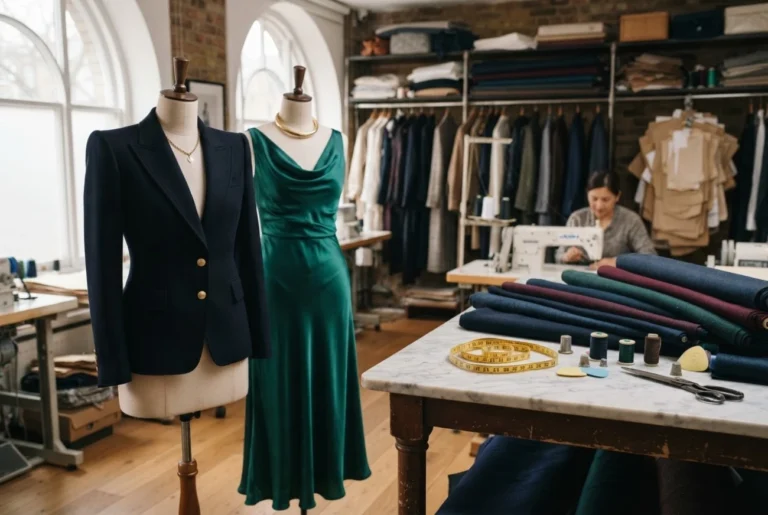
Once you can reliably tell real Thai silk, the fun part begins: having it made into something you will actually wear. Loose lengths of beautiful silk have a habit of sitting in a drawer, whereas a tailored garment gets used for years. Thai silk tailors beautifully into ties, scarves and pocket squares, into shirts and dresses, and into full suits for a special occasion in a tropical climate.
At Om Fashion, genuine Thai silk is a core specialty, and every piece is made to your measurements. If you want to see the range and what it can become, start with our Thai silk garments service, or explore softer everyday pieces like custom silk pajamas and kimonos. Because we keep your measurements on file, you can even reorder more silk pieces from home later.
Two related reads will round out your fabric knowledge before you commit. If you are shopping for the tropics, our guide to the best suit fabric for hot weather explains where silk fits alongside wool and linen. And if a wedding is the reason you are buying, see how silk works in our guide to the beach wedding suit for men.
Frequently asked questions
Is all silk sold in Bangkok fake?
No. Plenty of genuine Thai silk is sold in Bangkok, especially through established specialists and certified sellers. The tests in this guide simply help you separate the real cloth from the polyester imitations that are also common in tourist areas.
Can I do the burn test in a shop?
Only with the seller’s permission and only on a loose thread, never on a finished garment. A confident, reputable seller will usually agree, because they know their cloth will pass.
Does real Thai silk wrinkle?
Yes, silk can crease, though good Thai silk springs back reasonably well. Extreme stiffness or a total resistance to creasing can be a sign of a synthetic blend rather than pure silk.
Where can I have genuine Thai silk tailored in Bangkok?
Om Fashion Bespoke Tailor, on the first floor of the Royal Orchid Sheraton Hotel in Bang Rak, specializes in genuine Thai silk garments for both men and women. You can see the Thai silk service here and message the workshop directly to view samples.